Jamaica Builds a Safe-Water Shield After Hurricane Melissa
When Hurricane Melissa tore across Jamaica, it didn’t just rip roofs from homes and send rivers over their banks. It left behind something you can’t always see in the photos: water contaminated with disease.
In communities like Catherine Hall and Westgreen in St. James Parish, residents have been working through thick mud and stagnant water, and health officials are now investigating whether two people involved in cleanup may have died from leptospirosis – a dangerous bacterial infection often spread through water tainted by the urine of infected animals.(MENAFN)
With pools of floodwater lingering and sanitation systems overwhelmed, Jamaica’s Ministry of Health & Wellness has urged people to avoid wading through floodwater when possible, wear protective gear during cleanup, avoid food that may have been contaminated, and seek medical care quickly if they experience fever, chills, or flu-like symptoms.(MENAFN)
But warnings alone aren’t enough when families still have to walk through that water, clean their homes, and try to rebuild. That’s where WaterStep and our partners come in.

Standing With Jamaica’s Frontline Health Teams
As the country confronts rising public-health risks, WaterStep is expanding its work in Jamaica alongside: (MENAFN)
- The Ministry of Health & Wellness
- The Office of Disaster Preparedness and Emergency Management (ODPEM)
- Community health teams across the island
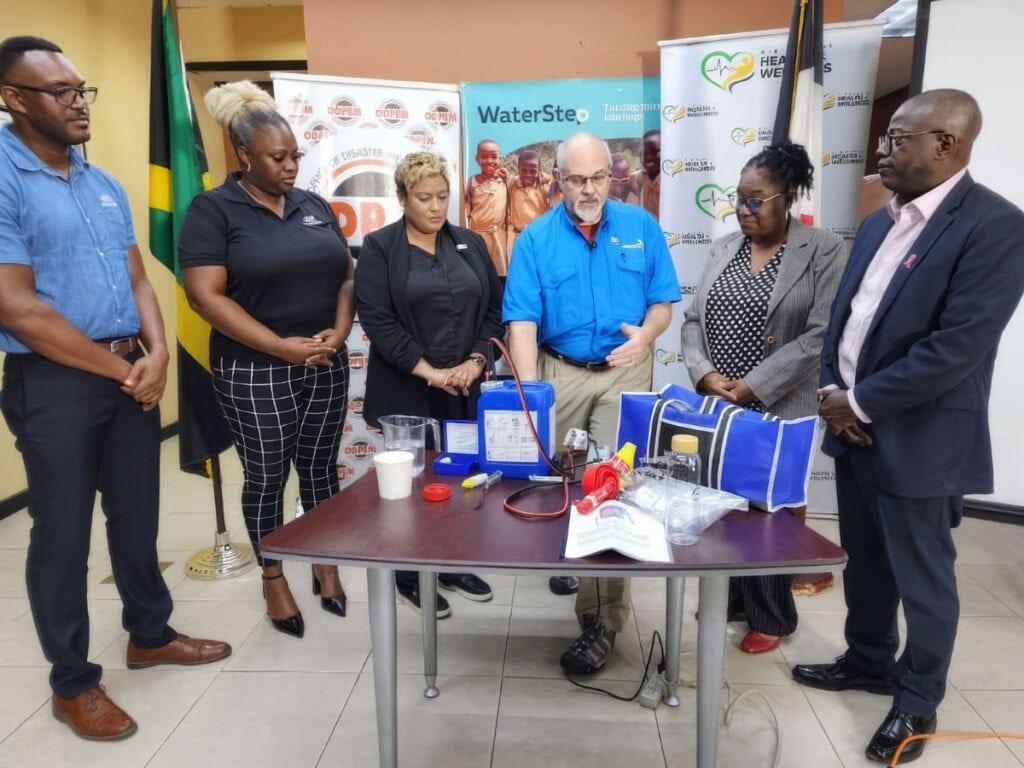
Together, we’re equipping clinics, hospitals, and other frontline facilities with onsite bleach-making and safe-water tools that help stop disease before it spreads.(MENAFN)
WaterStep has spent three decades developing simple, durable technologies and training methods for communities where water infrastructure is fragile – from dense urban settlements to rural villages to disaster zones.(WaterStep) Our role is to be a trusted guide: pairing compassion with technical expertise so local leaders can protect their own communities long after the cameras leave.
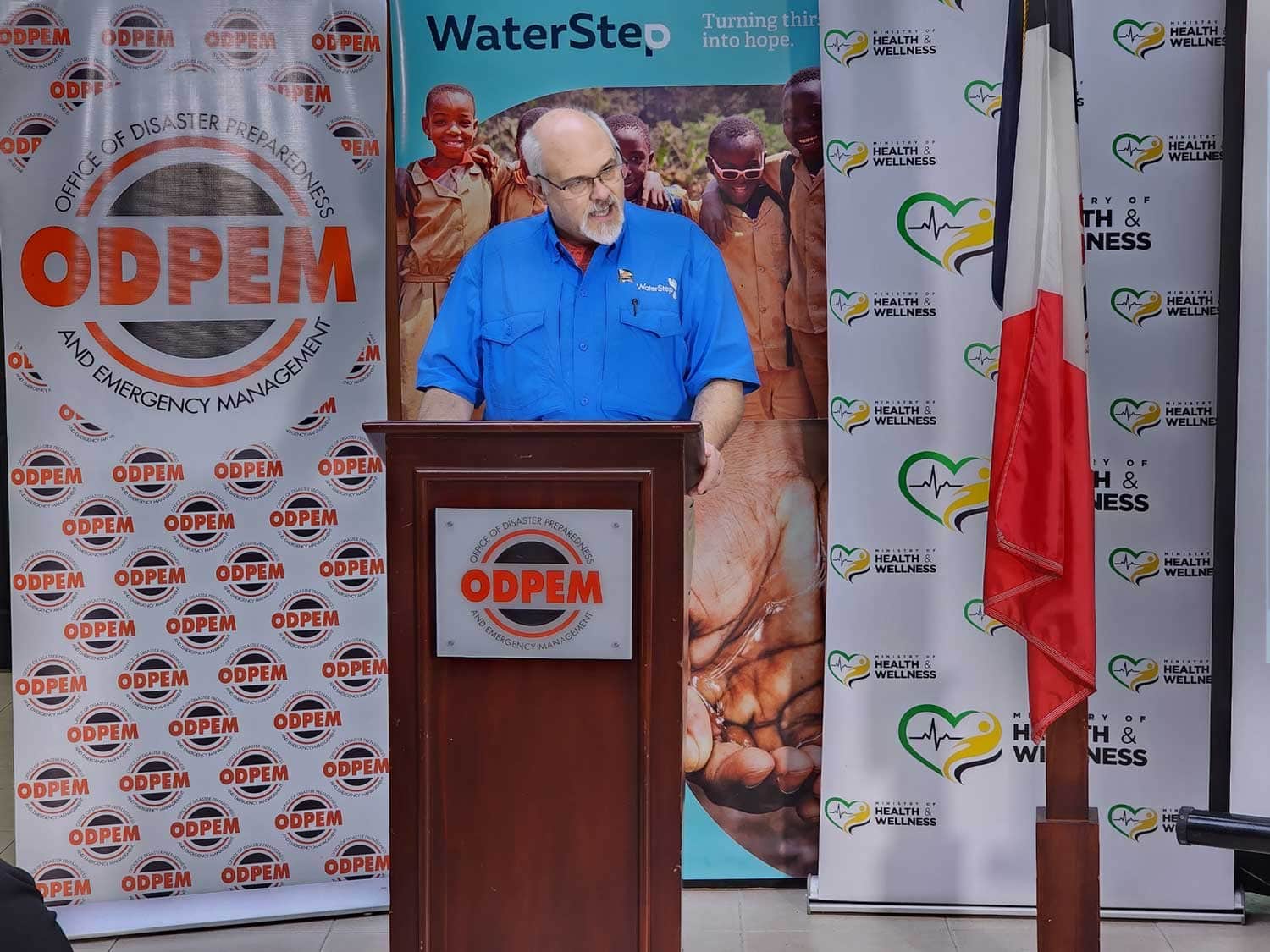
320 BleachMakers, Hundreds of Facilities, One Goal.
In Jamaica, that guidance is taking the form of 320 WaterStep BleachMakers and safe-water systems being pre-positioned across the island.(MENAFN)
Each BleachMaker is a compact, robust device that allows health facilities to create medical-grade disinfectant on site using just:(MENAFN)
- Water
- Common salt
- A small 12-volt power source (like a car battery or solar system)
The result is WHO-compliant disinfectant that can be produced locally, even when roads are washed out, supply chains fail, or bottled bleach can’t get through.(MENAFN)
That matters enormously after a storm like Melissa – described as one of the most powerful storms ever recorded in the Atlantic basin – where flooding, debris, and livestock losses all increase the risk of waterborne disease.(MENAFN)
With these 320 units distributed to strategic locations, Jamaica’s clinics and hospitals won’t have to wait on shipments to keep exam rooms, wards, and community spaces disinfected. The tools are already there, ready to go.(MENAFN)
Building a Nationwide “Resilience Shield”
This initiative isn’t just about responding to today’s crisis; it’s about changing what tomorrow looks like.
Working under the direction of the Ministry of Health & Wellness and ODPEM, WaterStep is helping Jamaica create what we call a safe-water and disinfection shield:(MENAFN)
- BleachMakers placed in the communities most vulnerable to flooding and contamination
- Local health teams trained to manufacture disinfectant safely and consistently
- Simple monitoring tools to track how much disinfectant is produced and where it’s used
If this system is successful at scale, Jamaica could become the regional model for disaster preparedness – showing that reliable, locally produced disinfectant and safe water can form a powerful first line of defense for the Caribbean.(MENAFN)
Training Local Teams for Long-Term Impact
Technology alone doesn’t save lives – people using it well do.
WaterStep trainers are working side by side with Jamaican health staff to:(MENAFN)
- Demonstrate how to operate the BleachMakers
- Teach safe handling, storage, and dosing of disinfectant
- Integrate on-site bleach-making into existing infection-prevention protocols
- Build confidence so teams can keep systems running long after the emergency phase
This hands-on approach is the same one WaterStep has used in more than 5,000 projects across 72 countries, impacting over 15 million lives with safe water and sanitation solutions.(WaterStep)
Our first response teams are already on the ground in Jamaica, working with partners to set up safe water and disinfectant hubs where families are currently collecting unsafe water for drinking, bathing, laundry, and cooking.(YouTube) Each new hub is another step toward preventing a second wave of suffering.
Why Safe Water Can’t Wait
Leptospirosis is just one of several diseases that can surge after a hurricane, alongside threats like gastroenteritis and dengue.(Fellow Nurses Africa) When floodwaters recede, the risk doesn’t disappear – it spreads through contaminated puddles, soil, and water sources that families still rely on.
By helping Jamaica:
- Create disinfectant on demand
- Protect hospitals and clinics from infection outbreaks
- Empower local teams with training and tools
WaterStep and its partners are working to make sure Hurricane Melissa’s legacy is resilience, not disease.
How You Can Step In
This work in Jamaica is one chapter in WaterStep’s broader story:
Changing more than 15 million lives in 72 countries through safe water and hope – and galvanizing the 6 billion people who do have safe water to help bring it to the 2.2 billion who don’t.(WaterStep)
Here’s how you can take your next step with us:
- Donate to help deploy more BleachMakers, safe-water systems, and training in Jamaica and beyond
- Share this story so more people understand the hidden dangers that follow disasters – and the simple, proven tools that can stop them → [social icons with the blog links pre-populated]
WaterStep has the way.
Do you have the will?
Step forward and join us in building a world where safe water – and the health it protects – is within reach for every community.
Images Source: EIN Presswire “WaterStep Supports Jamaica’s Health System as Leptospirosis Concerns Rise After Hurricane Melissa” CBS24, 18 Nov. 2025, www.cbs42.com/business/press-releases/ein-presswire/868325995/waterstep-supports-jamaicas-health-system-as-leptospirosis-concerns-rise-after-hurricane-melissa/


 Read more